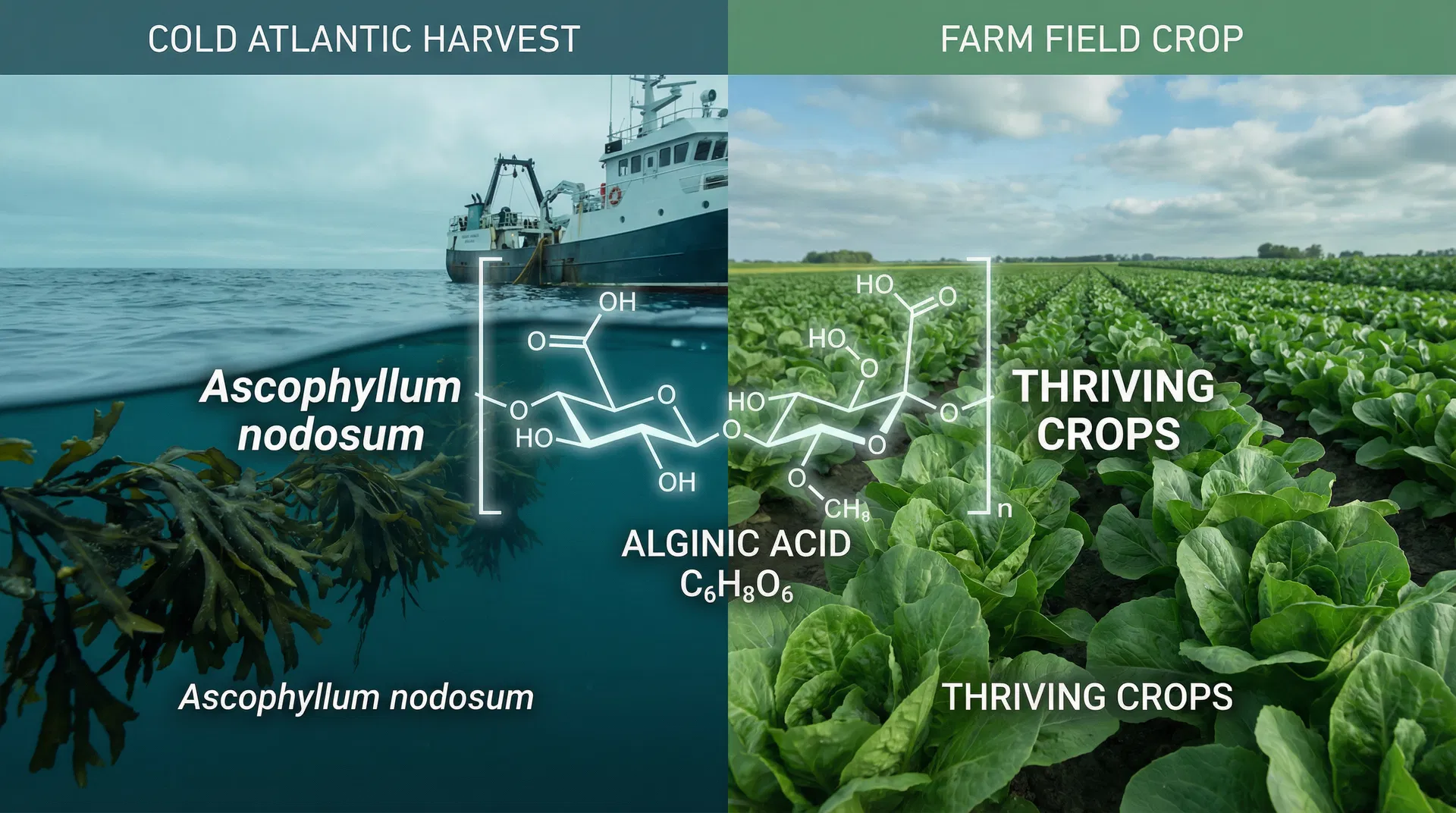
Seaweed fertilizer has been used in agriculture for centuries, but modern science has only recently revealed the full depth of its benefits. Derived from Ascophyllum nodosum, Ecklonia maxima, and other brown seaweeds, seaweed extract is now recognized as one of agriculture's most powerful biostimulants — improving plant growth, stress tolerance, and crop quality in ways that no synthetic fertilizer can replicate. This article covers the key benefits of seaweed fertilizer, how it works at the cellular level, and how to use it effectively for mango, banana, vegetable, and other tropical crops.
What Makes Seaweed Fertilizer Unique?
Unlike conventional fertilizers that simply supply nutrients (N, P, K), seaweed extract contains a complex mixture of bioactive compounds that directly influence plant physiology. These include natural plant hormones (cytokinins, auxins, gibberellins), alginic acid, mannitol, betaines, and over 60 trace minerals. These compounds work synergistically — each amplifying the effect of the others — to improve plant health and productivity in ways that cannot be achieved with synthetic inputs alone.
The key distinction between seaweed fertilizer and conventional fertilizers is that seaweed works primarily as a biostimulant — it stimulates the plant's own biological processes rather than simply supplying external nutrients. This means seaweed fertilizer improves how efficiently the plant uses all fertilizers, making it a powerful complement to any NPK or organic fertilizer program.
Key Benefits of Seaweed Fertilizer
Field trials and peer-reviewed research consistently demonstrate three core areas where seaweed fertilizer delivers measurable, repeatable results: root development, nutrient absorption, and stress resistance.
Root Development
Auxins in seaweed extract promote lateral root branching and root hair development. Studies show 25–40% increases in root biomass within 3 weeks of application. Stronger, more extensive root systems mean better water and nutrient uptake — the foundation of high yields. This benefit is particularly important during transplanting and early establishment, when root development determines the plant's long-term productivity.
Nutrient Absorption
Alginic acid in seaweed extract improves root membrane permeability, allowing plants to absorb nutrients more efficiently. When combined with NPK fertilizers, seaweed extract improves overall nutrient uptake efficiency by 15–25%. This means you get more yield from the same amount of fertilizer — reducing input costs while improving results. Seaweed also chelates micronutrients, keeping them in a plant-available form even in high-pH soils where micronutrient deficiencies are common.
Stress Resistance
Betaines and mannitol in seaweed extract act as osmoprotectants, helping plants maintain cell turgor during water stress, heat stress, and cold snaps. Field trials in tropical regions show 15–20% better yield maintenance during drought periods compared to untreated plots. This stress-buffering effect is critical for tropical crops like mango and banana, which are frequently exposed to irregular rainfall and temperature extremes.
Flowering and Fruit Set Improvement
Cytokinins in seaweed extract promote cell division and delay senescence in flowers, improving fruit retention. Mango and coffee growers report 10–25% improvements in fruit set percentage when seaweed is applied 2–4 weeks before flowering. The natural growth hormones in seaweed also improve pollen viability and fertilization rates, leading to more uniform fruit development.
Soil Microbial Activity
Alginic acid acts as a soil conditioner, improving soil structure and stimulating beneficial microbial populations. Healthy soil biology improves nutrient cycling, making other fertilizers more effective. Regular seaweed applications build long-term soil health — a benefit that compounds over multiple seasons.
Crop Quality and Shelf Life
Regular seaweed applications improve fruit color, firmness, and Brix levels. Post-harvest studies show 20–30% longer shelf life for fruits treated with seaweed programs — critical for export markets where produce must survive long transit times. For mango exporters targeting Japan, Europe, and the Middle East, seaweed fertilizer is an essential tool for meeting strict quality standards.
Reduced Pesticide and Fertilizer Costs
By improving plant immune responses (systemic acquired resistance), seaweed extract reduces susceptibility to fungal diseases and insect pests. Farms using regular seaweed programs report 10–20% reductions in pesticide costs over time. Combined with improved nutrient use efficiency, seaweed fertilizer typically pays for itself within the first season of use.
How to Use Seaweed Fertilizer
Seaweed fertilizer is highly versatile and can be applied via multiple methods depending on the crop, growth stage, and available equipment. The following table summarizes the recommended application methods, dilution rates, and frequencies for tropical crops:
| Application Method | Dilution Rate | Frequency | Best For |
|---|---|---|---|
| Foliar Spray | 1:500 – 1:800 | Every 10–15 days | Flowering, fruit set, stress response |
| Drip Irrigation | 1:200 – 1:300 | Weekly during growth | Root development, nutrient uptake |
| Soil Drench | 1:100 – 1:200 | Monthly | Soil health, transplanting |
| Seed Treatment | 1:50 | Once before planting | Germination, early vigor |
For crop-specific application programs, see our Mango Fertilizer Solution, Banana Fertilizer Solution, and Vegetable Fertilizer Solution pages.
Explore Our Seaweed Liquid Fertilizer
Premium Ascophyllum nodosum extract — available in 1L, 5L, 20L, and bulk IBC formats. OEM/private label available.